WEB4-026 · WEB4
Multi-Agent Governance
Many helpers need governance for the spaces between them.
01
Big idea
Many helpers need governance for the spaces between them.
Picture
See the structure
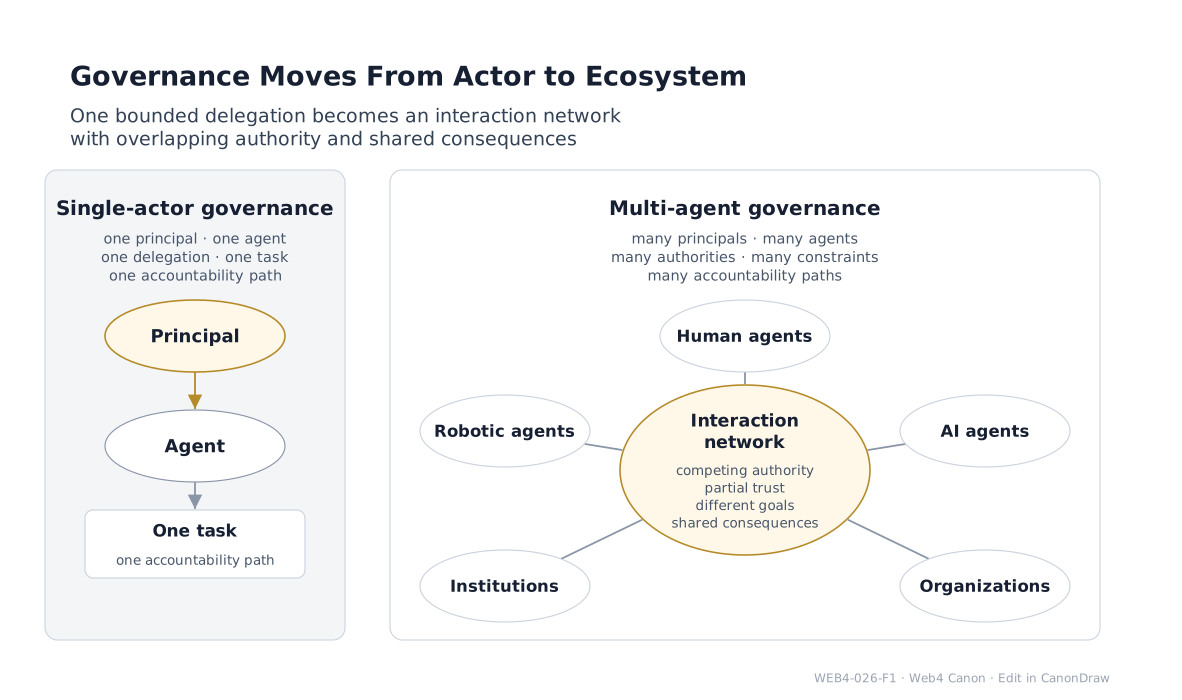
The simple version
Explain it like I’m ten
Four children build a volcano. One gathers facts, one mixes the paste, one paints, and one presents. They need rules for sharing materials, checking work, solving disagreements, and asking the teacher when a choice is too risky.
Tell it at dinner
A story worth remembering
Four children build a volcano. One gathers facts, one mixes the paste, one paints, and one presents. They need rules for sharing materials, checking work, solving disagreements, and asking the teacher when a choice is too risky.
Now make the same problem larger: replace the children and ordinary objects with people, organizations, AI agents, robots, records, and resources moving at machine speed. Multi-agent governance addresses authority, coordination, conflict, shared resources, collective decisions, accountability, and escalation among interacting human and machine agents. Organizations can deploy agent teams without allowing local optimizations, hidden handoffs, or collective behavior to escape oversight.
Pause at the moment the small system could go wrong. That is the design question the paper keeps in view: not whether people or helpers are clever, but whether the surrounding structure preserves the intended meaning when action scales.
That is why the small story holds: many helpers need governance for the spaces between them.
Explain it to a CEO
Why leaders should care
Organizations can deploy agent teams without allowing local optimizations, hidden handoffs, or collective behavior to escape oversight. Multi-agent governance addresses authority, coordination, conflict, shared resources, collective decisions, accountability, and escalation among interacting human and machine agents.
Explain it to an engineer
What the model means
Model team membership, roles, shared and individual scopes, coordination protocols, resource controls, communication provenance, conflict resolution, monitoring, and escalation. Governing each agent separately is insufficient.
Talk hook
The hardest agent to govern may be the team that no one designed as a whole.
Ask the room
Who is accountable when several agents jointly produce a harmful outcome?
Go deeper
The Canon is the source of truth.
WEB4-026 formalizes this structure: Multi-agent governance addresses authority, coordination, conflict, shared resources, collective decisions, accountability, and escalation among interacting human and machine agents. The ordinary-life story is an intuition aid, not a replacement definition; the canonical paper remains authoritative for scope, terminology, limitations, and argument.
Read WEB4-026 — the authoritative paper →