WEB4-019 · WEB4
Provenance Systems
Provenance tells the story of where something came from.
01
Big idea
Provenance tells the story of where something came from.
Picture
See the structure
The simple version
Explain it like I’m ten
A loaf arrives on the table. Follow it backward and you find the baker, the bag of flour, the mill, the wheat, and the farm. If something is wrong, the trail helps people learn where it began and what happened along the way.
Tell it at dinner
A story worth remembering
A loaf arrives on the table. Follow it backward and you find the baker, the bag of flour, the mill, the wheat, and the farm. If something is wrong, the trail helps people learn where it began and what happened along the way.
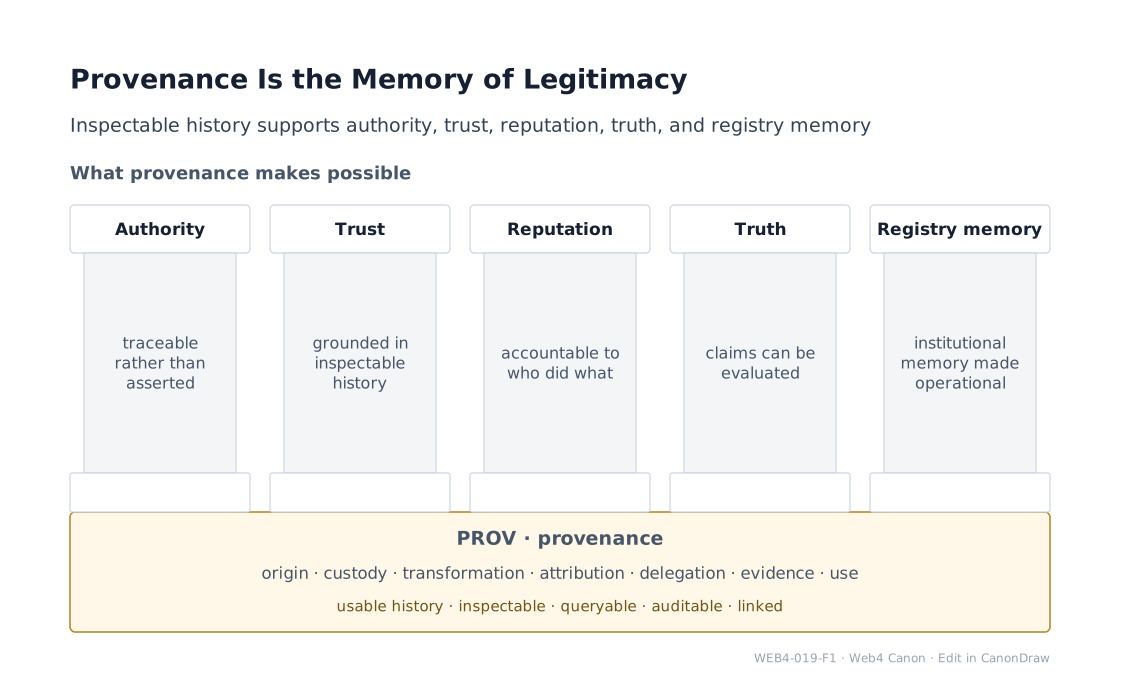
Now make the same problem larger: replace the children and ordinary objects with people, organizations, AI agents, robots, records, and resources moving at machine speed. Provenance records origin, custody, transformation, attribution, delegation, evidence, and use so legitimacy can be reconstructed. Provenance supports audits, safety, accountability, and trustworthy reuse across data, decisions, models, assets, and agent actions.
Pause at the moment the small system could go wrong. That is the design question the paper keeps in view: not whether people or helpers are clever, but whether the surrounding structure preserves the intended meaning when action scales.
That is why the small story holds: provenance tells the story of where something came from.
Explain it to a CEO
Why leaders should care
Provenance supports audits, safety, accountability, and trustworthy reuse across data, decisions, models, assets, and agent actions. Provenance records origin, custody, transformation, attribution, delegation, evidence, and use so legitimacy can be reconstructed.
Explain it to an engineer
What the model means
Capture append-only or versioned provenance events, identities, transformations, custody, dependencies, evidence, and timestamps with appropriate trust boundaries. Provenance records history; it does not guarantee the truth of every recorded claim.
Talk hook
Every output has a family tree—even when nobody bothered to record it.
Ask the room
Could you trace an important decision back through every source and transformation?
Go deeper
The Canon is the source of truth.
WEB4-019 formalizes this structure: Provenance records origin, custody, transformation, attribution, delegation, evidence, and use so legitimacy can be reconstructed. The ordinary-life story is an intuition aid, not a replacement definition; the canonical paper remains authoritative for scope, terminology, limitations, and argument.
Read WEB4-019 — the authoritative paper →