WEB4-017 · WEB4
Stewardship Systems
Authority says who may act; stewardship says who must care.
01
Big idea
Authority says who may act; stewardship says who must care.
Picture
See the structure
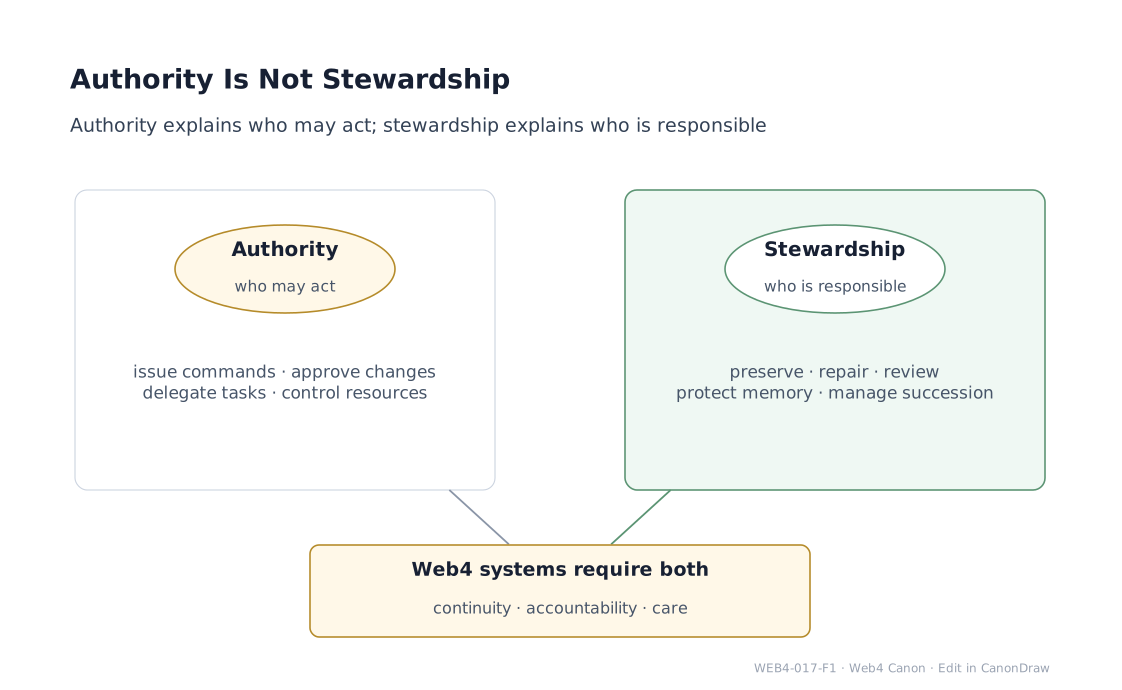
The simple version
Explain it like I’m ten
Everyone enjoys the community garden, but someone must water it, mend the fence, save seeds, and teach the next caretaker. Owning the garden sign is not enough. The garden survives because care has a name and a handoff plan.
Tell it at dinner
A story worth remembering
Everyone enjoys the community garden, but someone must water it, mend the fence, save seeds, and teach the next caretaker. Owning the garden sign is not enough. The garden survives because care has a name and a handoff plan.
Now make the same problem larger: replace the children and ordinary objects with people, organizations, AI agents, robots, records, and resources moving at machine speed. Stewardship systems assign durable responsibility for continuity, maintenance, review, repair, succession, and long-term alignment. Explicit stewardship reduces orphaned systems, neglected controls, and leadership gaps across long-lived digital and physical assets.
Pause at the moment the small system could go wrong. That is the design question the paper keeps in view: not whether people or helpers are clever, but whether the surrounding structure preserves the intended meaning when action scales.
That is why the small story holds: authority says who may act; stewardship says who must care.
Explain it to a CEO
Why leaders should care
Explicit stewardship reduces orphaned systems, neglected controls, and leadership gaps across long-lived digital and physical assets. Stewardship systems assign durable responsibility for continuity, maintenance, review, repair, succession, and long-term alignment.
Explain it to an engineer
What the model means
Model stewardship roles, assets, duties, review cadence, succession, conflicts, revocation, and evidence. Stewardship is accountable care on behalf of others, not unrestricted ownership.
Talk hook
Every critical system has an owner on paper—but does it have a caretaker in practice?
Ask the room
Who is responsible for this system after its creator or sponsor leaves?
Go deeper
The Canon is the source of truth.
WEB4-017 formalizes this structure: Stewardship systems assign durable responsibility for continuity, maintenance, review, repair, succession, and long-term alignment. The ordinary-life story is an intuition aid, not a replacement definition; the canonical paper remains authoritative for scope, terminology, limitations, and argument.
Read WEB4-017 — the authoritative paper →