INC-010 · INC
Reputation Systems: Engineering Trust Through Incentives
Reputation makes past behavior part of future incentives.
01
Big idea
Reputation makes past behavior part of future incentives.
Picture
See the structure
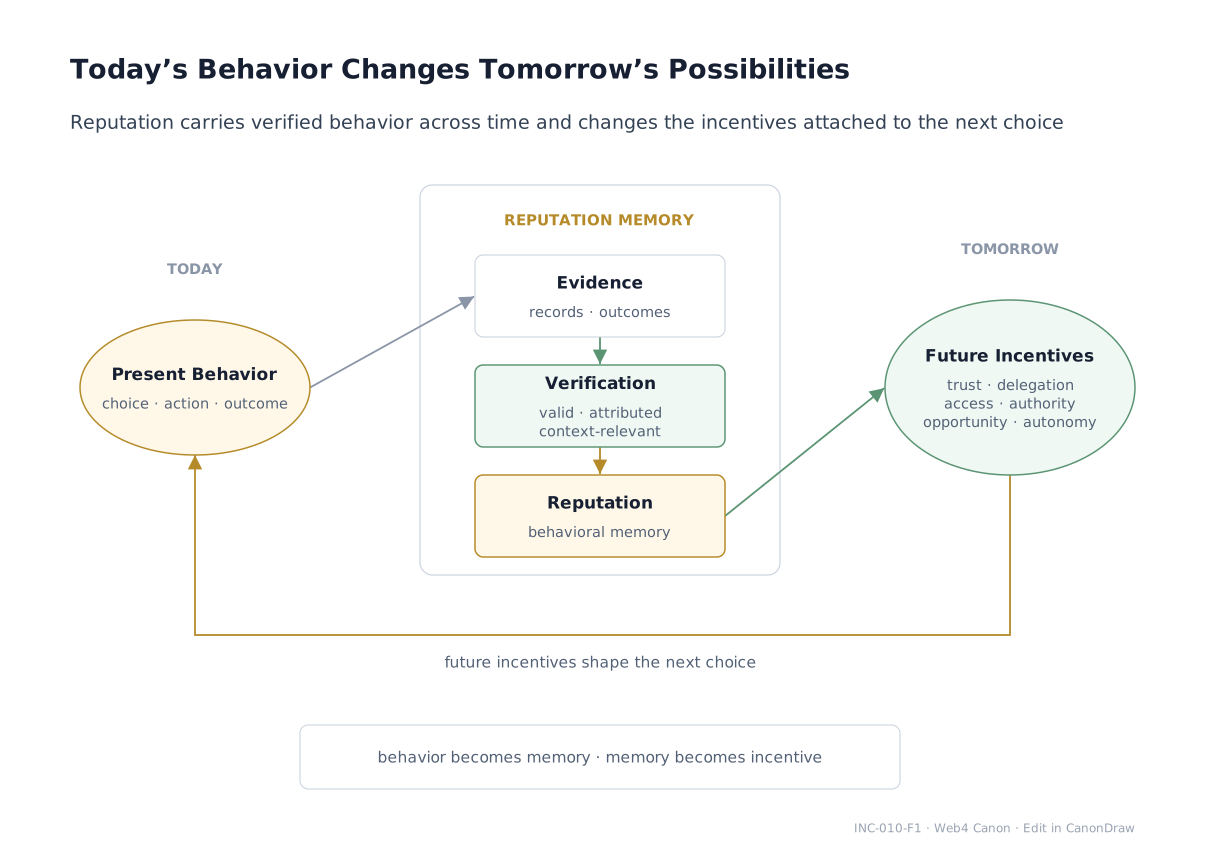
The simple version
Explain it like I’m ten
Children share scooters. Each careful return is written on the lending board. A good history lets a child borrow again with fewer worries, so caring for today's scooter helps tomorrow too.
Tell it at dinner
A story worth remembering
Children share scooters. Each careful return is written on the lending board. A good history lets a child borrow again with fewer worries, so caring for today's scooter helps tomorrow too.
Now make the same problem larger: replace the children and ordinary objects with people, organizations, AI agents, robots, records, and resources moving at machine speed. Reputation systems transform recorded behavior into future opportunities, constraints, trust, and incentives, linking short-term choices to long-term consequences. Well-designed reputation can lower risk and reward reliability while contestability and context prevent permanent or unfair scoring.
Pause at the moment the small system could go wrong. That is the design question the paper keeps in view: not whether people or helpers are clever, but whether the surrounding structure preserves the intended meaning when action scales.
That is why the small story holds: reputation makes past behavior part of future incentives.
Explain it to a CEO
Why leaders should care
Well-designed reputation can lower risk and reward reliability while contestability and context prevent permanent or unfair scoring. Reputation systems transform recorded behavior into future opportunities, constraints, trust, and incentives, linking short-term choices to long-term consequences.
Explain it to an engineer
What the model means
Build evidence-backed, contextual, time-aware, privacy-preserving, appealable reputation with anti-gaming, decay, uncertainty, and policy separation. Reputation must not become identity or automatic authority.
Talk hook
Reputation is how tomorrow reaches back and changes today's choice.
Ask the room
What future opportunity should reliable behavior earn—and how can an error be corrected?
Go deeper
The Canon is the source of truth.
INC-010 formalizes this structure: Reputation systems transform recorded behavior into future opportunities, constraints, trust, and incentives, linking short-term choices to long-term consequences. The ordinary-life story is an intuition aid, not a replacement definition; the canonical paper remains authoritative for scope, terminology, limitations, and argument.
Read INC-010 — the authoritative paper →