INC-011 · INC
Trust Engineering: Designing Systems That Earn and Sustain Trust
Trust is earned by reliable, verifiable, accountable behavior over time.
01
Big idea
Trust is earned by reliable, verifiable, accountable behavior over time.
Picture
See the structure
The simple version
Explain it like I’m ten
Children will cross a rope bridge when the ropes are strong, an adult checks it, broken boards are repaired, and a sign says how many people may cross. Painting “Trust Me” on the bridge would not help.
Tell it at dinner
A story worth remembering
Children will cross a rope bridge when the ropes are strong, an adult checks it, broken boards are repaired, and a sign says how many people may cross. Painting “Trust Me” on the bridge would not help.
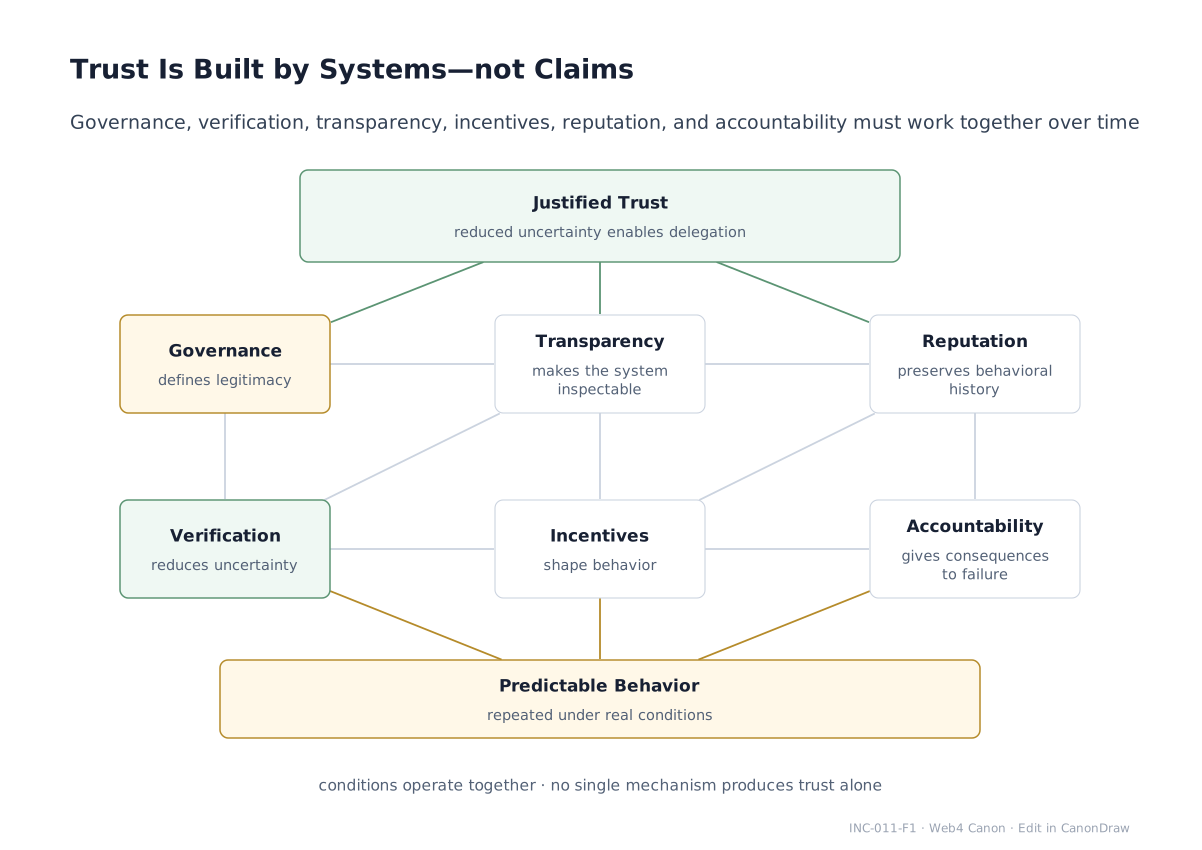
Now make the same problem larger: replace the children and ordinary objects with people, organizations, AI agents, robots, records, and resources moving at machine speed. Trust Engineering intentionally designs systems that create, preserve, measure, calibrate, damage, restore, and improve trust through governance, verification, transparency, reputation, and aligned incentives. Trust becomes a manageable operating property rather than a branding claim, improving adoption, partnership, and resilience after failure.
Pause at the moment the small system could go wrong. That is the design question the paper keeps in view: not whether people or helpers are clever, but whether the surrounding structure preserves the intended meaning when action scales.
That is why the small story holds: trust is earned by reliable, verifiable, accountable behavior over time.
Explain it to a CEO
Why leaders should care
Trust becomes a manageable operating property rather than a branding claim, improving adoption, partnership, and resilience after failure. Trust Engineering intentionally designs systems that create, preserve, measure, calibrate, damage, restore, and improve trust through governance, verification, transparency, reputation, and aligned incentives.
Explain it to an engineer
What the model means
Engineer trust through evidence, predictable behavior, transparency, verification, reputation, aligned incentives, accountability, failure disclosure, repair, and calibration. Trust is contextual and cannot be reduced to one score.
Talk hook
Trust is not the opposite of verification; it is what reliable verification helps produce.
Ask the room
What would your stakeholders need to see before trusting this system after a failure?
Go deeper
The Canon is the source of truth.
INC-011 formalizes this structure: Trust Engineering intentionally designs systems that create, preserve, measure, calibrate, damage, restore, and improve trust through governance, verification, transparency, reputation, and aligned incentives. The ordinary-life story is an intuition aid, not a replacement definition; the canonical paper remains authoritative for scope, terminology, limitations, and argument.
Read INC-011 — the authoritative paper →