WEB4-034 · WEB4
ICARS
Responsibility should be observable, not merely assigned.
01
Big idea
Responsibility should be observable, not merely assigned.
Picture
See the structure
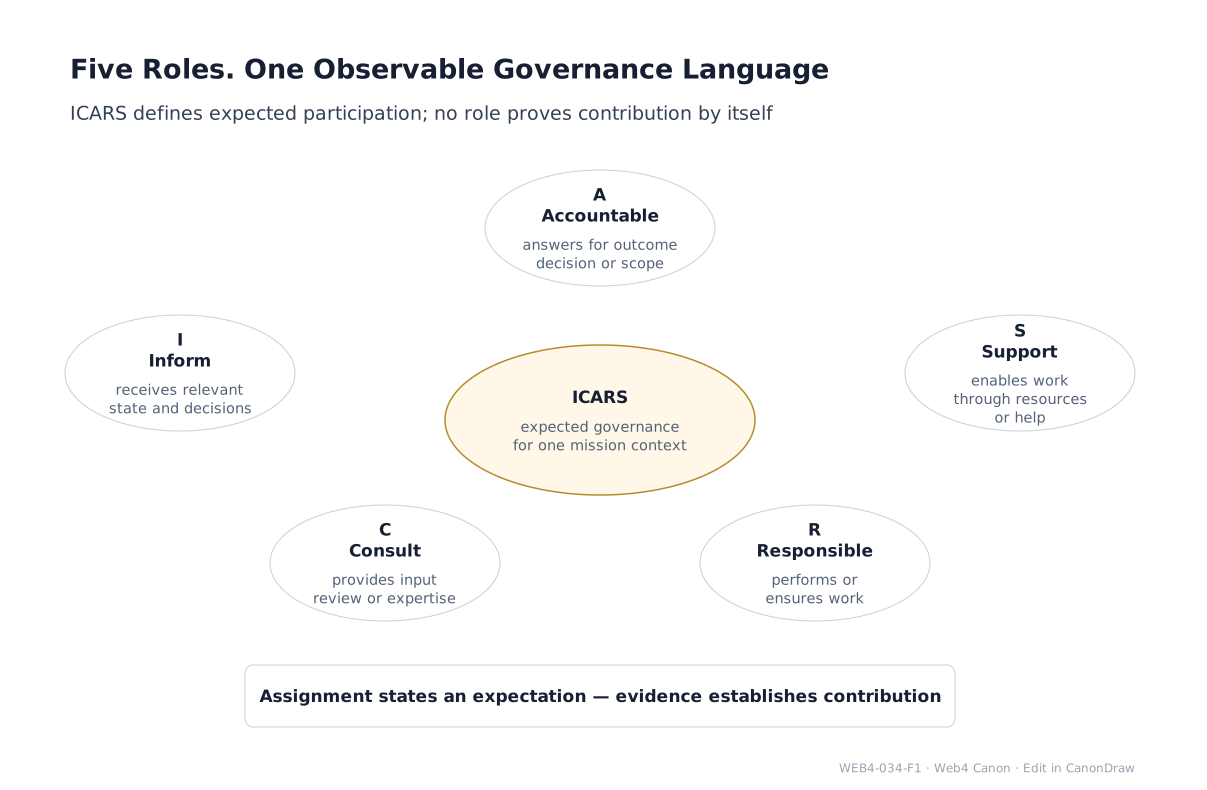
The simple version
Explain it like I’m ten
Before a school play, the class writes who announces it, who helps, who must be asked, who makes the final decision, and who builds the stage. During the play, check marks show whether each promise was actually kept.
Tell it at dinner
A story worth remembering
Before a school play, the class writes who announces it, who helps, who must be asked, who makes the final decision, and who builds the stage. During the play, check marks show whether each promise was actually kept.
Now make the same problem larger: replace the children and ordinary objects with people, organizations, AI agents, robots, records, and resources moving at machine speed. ICARS modernizes responsibility governance across humans, agents, automation, contractors, and systems by pairing assigned roles with provable runtime responsibility. Leaders gain evidence about whether governance actually operated, reducing the gap between responsibility charts and real execution.
Pause at the moment the small system could go wrong. That is the design question the paper keeps in view: not whether people or helpers are clever, but whether the surrounding structure preserves the intended meaning when action scales.
That is why the small story holds: responsibility should be observable, not merely assigned.
Explain it to a CEO
Why leaders should care
Leaders gain evidence about whether governance actually operated, reducing the gap between responsibility charts and real execution. ICARS modernizes responsibility governance across humans, agents, automation, contractors, and systems by pairing assigned roles with provable runtime responsibility.
Explain it to an engineer
What the model means
Model ICARS responsibility relationships and connect them to the Provable Responsibility Matrix, events, evidence, exceptions, reviews, and updates. Role labels describe governance expectations; they do not create authority by themselves.
Talk hook
A responsibility chart says who should act. Can your systems show who actually did?
Ask the room
Where is accountability assigned in a slide deck but invisible in operations?
Go deeper
The Canon is the source of truth.
WEB4-034 formalizes this structure: ICARS modernizes responsibility governance across humans, agents, automation, contractors, and systems by pairing assigned roles with provable runtime responsibility. The ordinary-life story is an intuition aid, not a replacement definition; the canonical paper remains authoritative for scope, terminology, limitations, and argument.
Read WEB4-034 — the authoritative paper →