WEB4-021 · WEB4
Identity Systems
Identity is a name tag for the digital world, not a permission slip.
01
Big idea
Identity is a name tag for the digital world, not a permission slip.
Picture
See the structure
The simple version
Explain it like I’m ten
At school, a name tag tells who Sam is and a backpack label tells which bag is Sam’s. Neither label lets Sam enter the teachers’ room. Knowing who someone is comes before deciding what they may do.
Tell it at dinner
A story worth remembering
At school, a name tag tells who Sam is and a backpack label tells which bag is Sam’s. Neither label lets Sam enter the teachers’ room. Knowing who someone is comes before deciding what they may do.
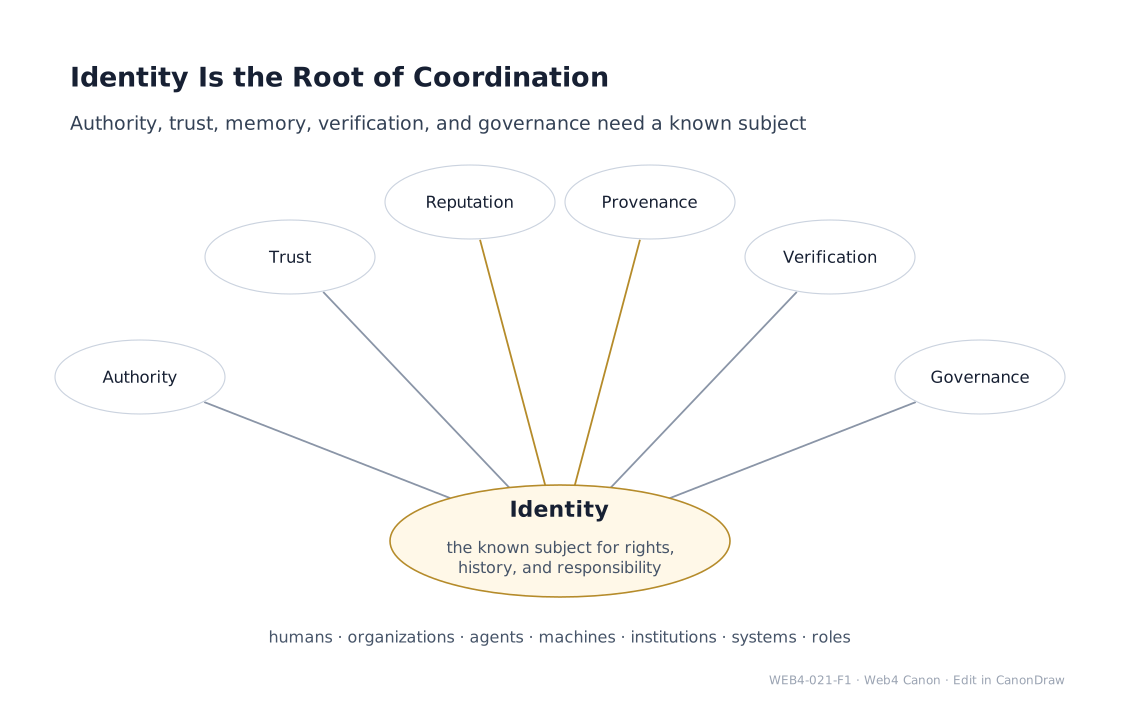
Now make the same problem larger: replace the children and ordinary objects with people, organizations, AI agents, robots, records, and resources moving at machine speed. Identity is the root primitive that lets authority, trust, reputation, provenance, verification, governance, wallets, and assets attach to resolvable actors. Strong identity systems improve accountability and interoperability while preventing authentication from being mistaken for authorization.
Pause at the moment the small system could go wrong. That is the design question the paper keeps in view: not whether people or helpers are clever, but whether the surrounding structure preserves the intended meaning when action scales.
That is why the small story holds: identity is a name tag for the digital world, not a permission slip.
Explain it to a CEO
Why leaders should care
Strong identity systems improve accountability and interoperability while preventing authentication from being mistaken for authorization. Identity is the root primitive that lets authority, trust, reputation, provenance, verification, governance, wallets, and assets attach to resolvable actors.
Explain it to an engineer
What the model means
Support humans, organizations, agents, systems, and resources with identifiers, credentials, resolution, lifecycle, provenance, recovery, privacy, and context. Keep identity proof separate from authority decisions.
Talk hook
Before asking what an agent may do, can you reliably answer who it is?
Ask the room
Where does your organization confuse a valid login with legitimate authority?
Go deeper
The Canon is the source of truth.
WEB4-021 formalizes this structure: Identity is the root primitive that lets authority, trust, reputation, provenance, verification, governance, wallets, and assets attach to resolvable actors. The ordinary-life story is an intuition aid, not a replacement definition; the canonical paper remains authoritative for scope, terminology, limitations, and argument.
Read WEB4-021 — the authoritative paper →