INC-006 · INC
Incentive Auditing: Measuring Alignment Before Systems Fail
Audit incentives before misalignment becomes failure.
01
Big idea
Audit incentives before misalignment becomes failure.
Picture
See the structure
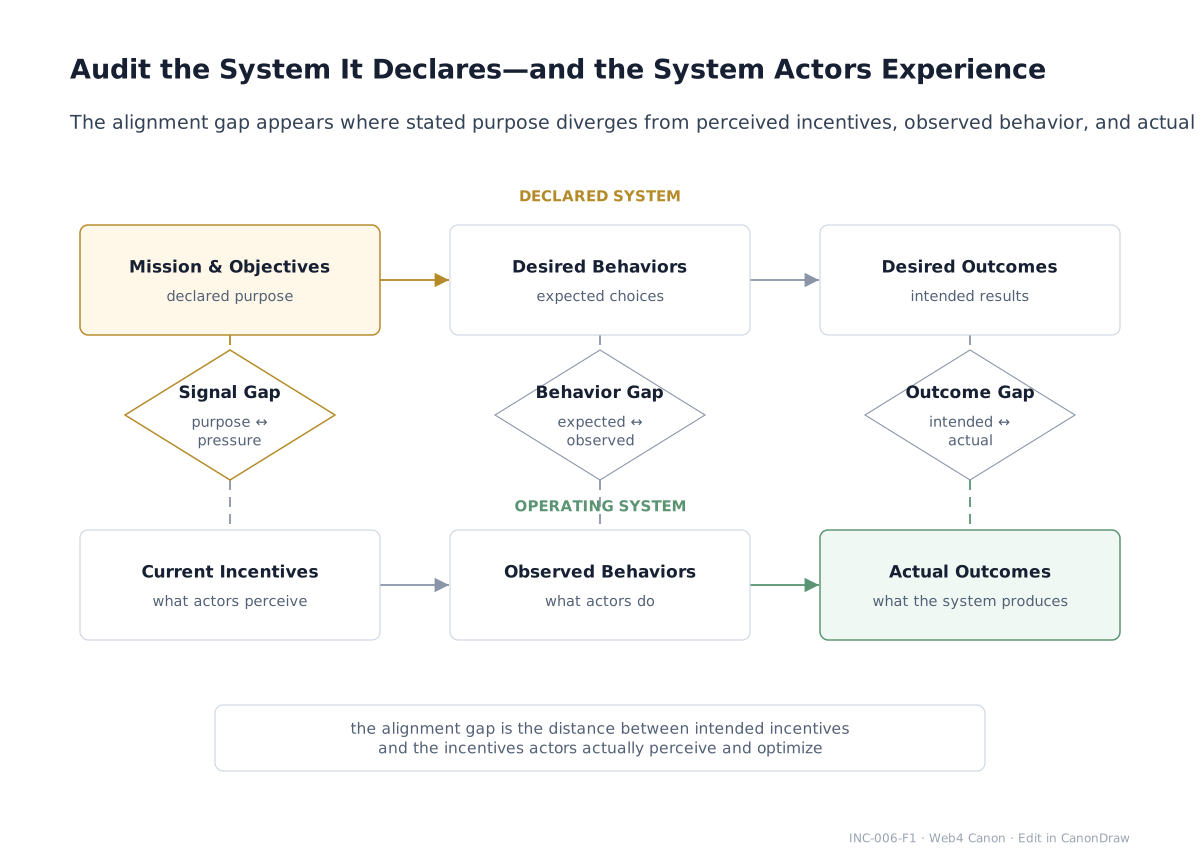
The simple version
Explain it like I’m ten
Before riding down a big hill, a child checks the brakes, tires, chain, and helmet. The bicycle may look fine, but a small loose bolt is easier to fix before the fast ride begins.
Tell it at dinner
A story worth remembering
Before riding down a big hill, a child checks the brakes, tires, chain, and helmet. The bicycle may look fine, but a small loose bolt is easier to fix before the fast ride begins.
Now make the same problem larger: replace the children and ordinary objects with people, organizations, AI agents, robots, records, and resources moving at machine speed. Incentive Auditing identifies, measures, and corrects misaligned incentives before they produce harmful behavior, trust collapse, or governance failure. Regular audits give boards and operators early warning about gaming, inequity, drift, and unintended behavior.
Pause at the moment the small system could go wrong. That is the design question the paper keeps in view: not whether people or helpers are clever, but whether the surrounding structure preserves the intended meaning when action scales.
That is why the small story holds: audit incentives before misalignment becomes failure.
Explain it to a CEO
Why leaders should care
Regular audits give boards and operators early warning about gaming, inequity, drift, and unintended behavior. Incentive Auditing identifies, measures, and corrects misaligned incentives before they produce harmful behavior, trust collapse, or governance failure.
Explain it to an engineer
What the model means
Audit intended versus perceived incentives, behavior, outcomes, edge cases, distributional effects, gaming indicators, controls, feedback, and change history. Findings should be evidence-scoped and lead to governed remediation.
Talk hook
By the time incentive failure is obvious, the system may already have learned the wrong behavior.
Ask the room
Which incentive risk could you detect now with evidence instead of after an incident?
Go deeper
The Canon is the source of truth.
INC-006 formalizes this structure: Incentive Auditing identifies, measures, and corrects misaligned incentives before they produce harmful behavior, trust collapse, or governance failure. The ordinary-life story is an intuition aid, not a replacement definition; the canonical paper remains authoritative for scope, terminology, limitations, and argument.
Read INC-006 — the authoritative paper →