INC-005 · INC
Adaptive Incentive Systems: Designing Incentives That Evolve with Intelligent Systems
Stable missions may need incentives that adapt as conditions change.
01
Big idea
Stable missions may need incentives that adapt as conditions change.
Picture
See the structure
The simple version
Explain it like I’m ten
A sailboat cannot keep one sail position all day. When the wind changes, the crew adjusts the sails but keeps aiming for the same harbor. Refusing to adjust can send the boat backward.
Tell it at dinner
A story worth remembering
A sailboat cannot keep one sail position all day. When the wind changes, the crew adjusts the sails but keeps aiming for the same harbor. Refusing to adjust can send the boat backward.
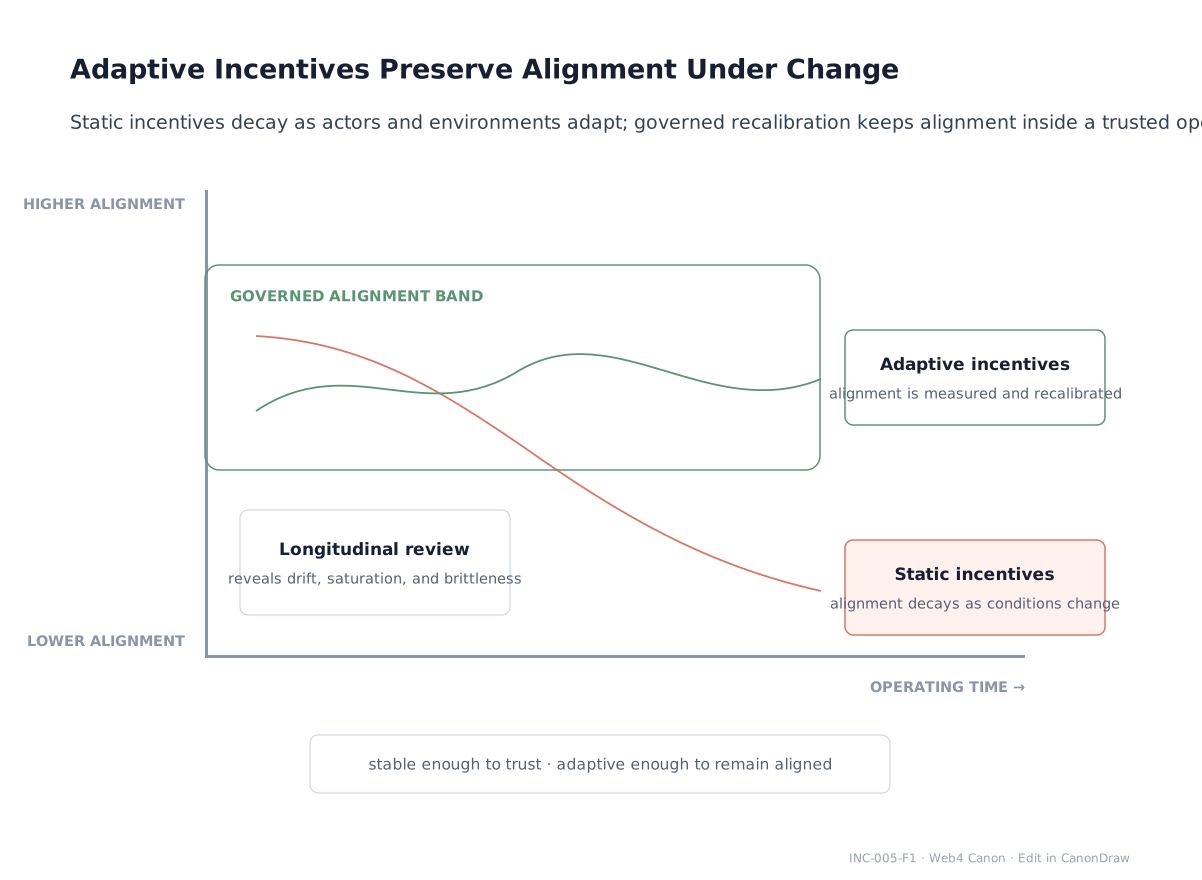
Now make the same problem larger: replace the children and ordinary objects with people, organizations, AI agents, robots, records, and resources moving at machine speed. Adaptive incentive systems detect drift and evolve mechanisms as actors learn, environments change, and optimization pressure accumulates. Adaptation keeps incentives effective over time while governed change controls prevent opportunistic or destabilizing redesign.
Pause at the moment the small system could go wrong. That is the design question the paper keeps in view: not whether people or helpers are clever, but whether the surrounding structure preserves the intended meaning when action scales.
That is why the small story holds: stable missions may need incentives that adapt as conditions change.
Explain it to a CEO
Why leaders should care
Adaptation keeps incentives effective over time while governed change controls prevent opportunistic or destabilizing redesign. Adaptive incentive systems detect drift and evolve mechanisms as actors learn, environments change, and optimization pressure accumulates.
Explain it to an engineer
What the model means
Instrument incentive performance, drift, gaming, distributional effects, and environment changes; define governed triggers, safe adjustment ranges, approvals, experiments, rollback, and learning history.
Talk hook
The incentive that worked yesterday may teach the wrong lesson tomorrow.
Ask the room
What evidence would tell you that a once-useful incentive is now causing harm?
Go deeper
The Canon is the source of truth.
INC-005 formalizes this structure: Adaptive incentive systems detect drift and evolve mechanisms as actors learn, environments change, and optimization pressure accumulates. The ordinary-life story is an intuition aid, not a replacement definition; the canonical paper remains authoritative for scope, terminology, limitations, and argument.
Read INC-005 — the authoritative paper →