WEB4-037 · WEB4
MissionStack
Put the mission at the center; tasks are implementation details.
01
Big idea
Put the mission at the center; tasks are implementation details.
Picture
See the structure
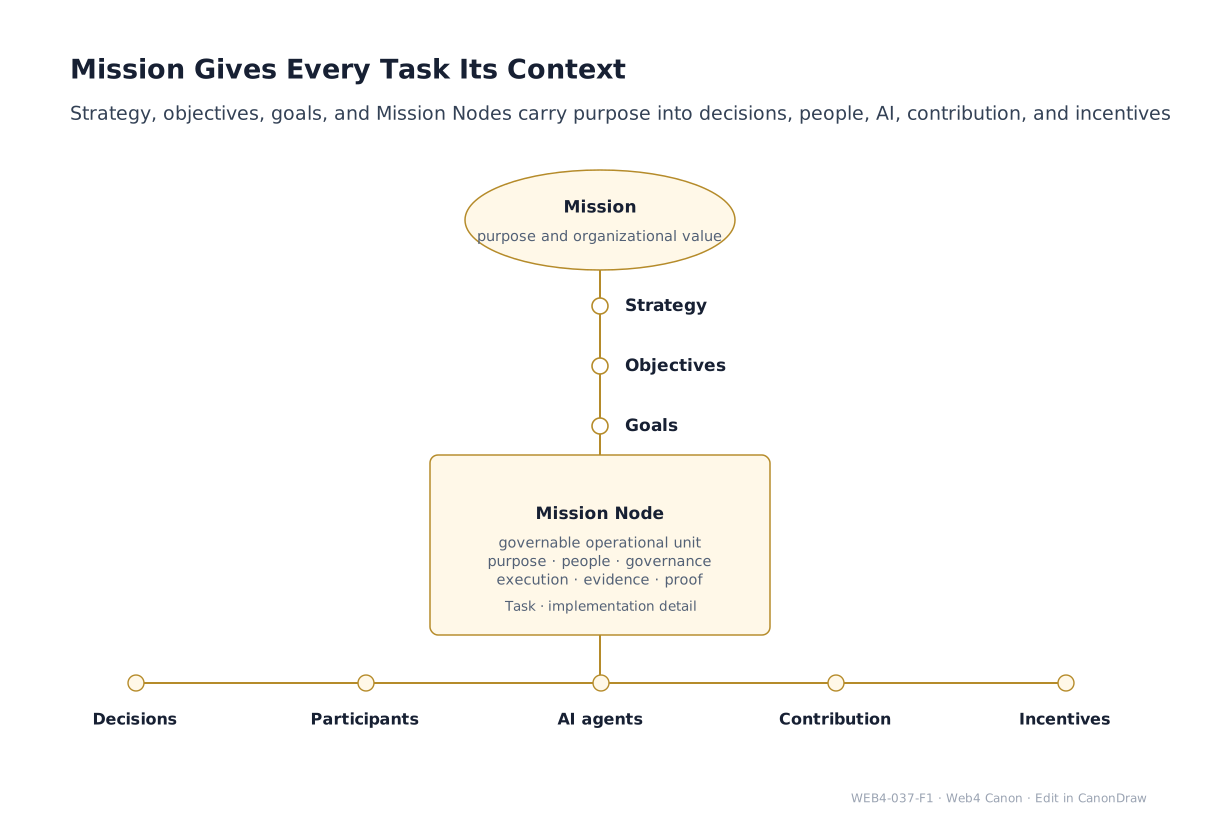
The simple version
Explain it like I’m ten
A hiking team does not win by checking off random chores. They choose a destination, plan a route, share supplies, assign jobs, stop at checkpoints, and learn from the trip. Every task makes sense because it serves the mission.
Tell it at dinner
A story worth remembering
A hiking team does not win by checking off random chores. They choose a destination, plan a route, share supplies, assign jobs, stop at checkpoints, and learn from the trip. Every task makes sense because it serves the mission.
Now make the same problem larger: replace the children and ordinary objects with people, organizations, AI agents, robots, records, and resources moving at machine speed. MissionStack is the operational workspace where organizations plan, delegate, execute, prove, recognize, and improve mission execution in a continuous lifecycle. A mission-centered system aligns teams, agents, evidence, and incentives around outcomes rather than fragmented task completion.
Pause at the moment the small system could go wrong. That is the design question the paper keeps in view: not whether people or helpers are clever, but whether the surrounding structure preserves the intended meaning when action scales.
That is why the small story holds: put the mission at the center; tasks are implementation details.
Explain it to a CEO
Why leaders should care
A mission-centered system aligns teams, agents, evidence, and incentives around outcomes rather than fragmented task completion. MissionStack is the operational workspace where organizations plan, delegate, execute, prove, recognize, and improve mission execution in a continuous lifecycle.
Explain it to an engineer
What the model means
Represent missions, strategy, objectives, goals, nodes, delegation, execution, evidence, proof, contribution, review, and learning as linked lifecycle state. It complements rather than merely renames project management.
Talk hook
What if every task could explain exactly which mission it serves?
Ask the room
How much work in your organization is completed without a visible connection to mission?
Go deeper
The Canon is the source of truth.
WEB4-037 formalizes this structure: MissionStack is the operational workspace where organizations plan, delegate, execute, prove, recognize, and improve mission execution in a continuous lifecycle. The ordinary-life story is an intuition aid, not a replacement definition; the canonical paper remains authoritative for scope, terminology, limitations, and argument.
Read WEB4-037 — the authoritative paper →