ROBOTICS-001 · ROBOTICS
Robotics as Delegated Agency
A robot is a physical helper whose authority must have visible boundaries.
01
Big idea
A robot is a physical helper whose authority must have visible boundaries.
Picture
See the structure
The simple version
Explain it like I’m ten
A robot may pick up balls inside the playground after school. Its badge says which robot it is, its card says the job and the chalk boundary, and a teacher can stop it. The robot may not follow a ball into the street.
Tell it at dinner
A story worth remembering
A robot may pick up balls inside the playground after school. Its badge says which robot it is, its card says the job and the chalk boundary, and a teacher can stop it. The robot may not follow a ball into the street.
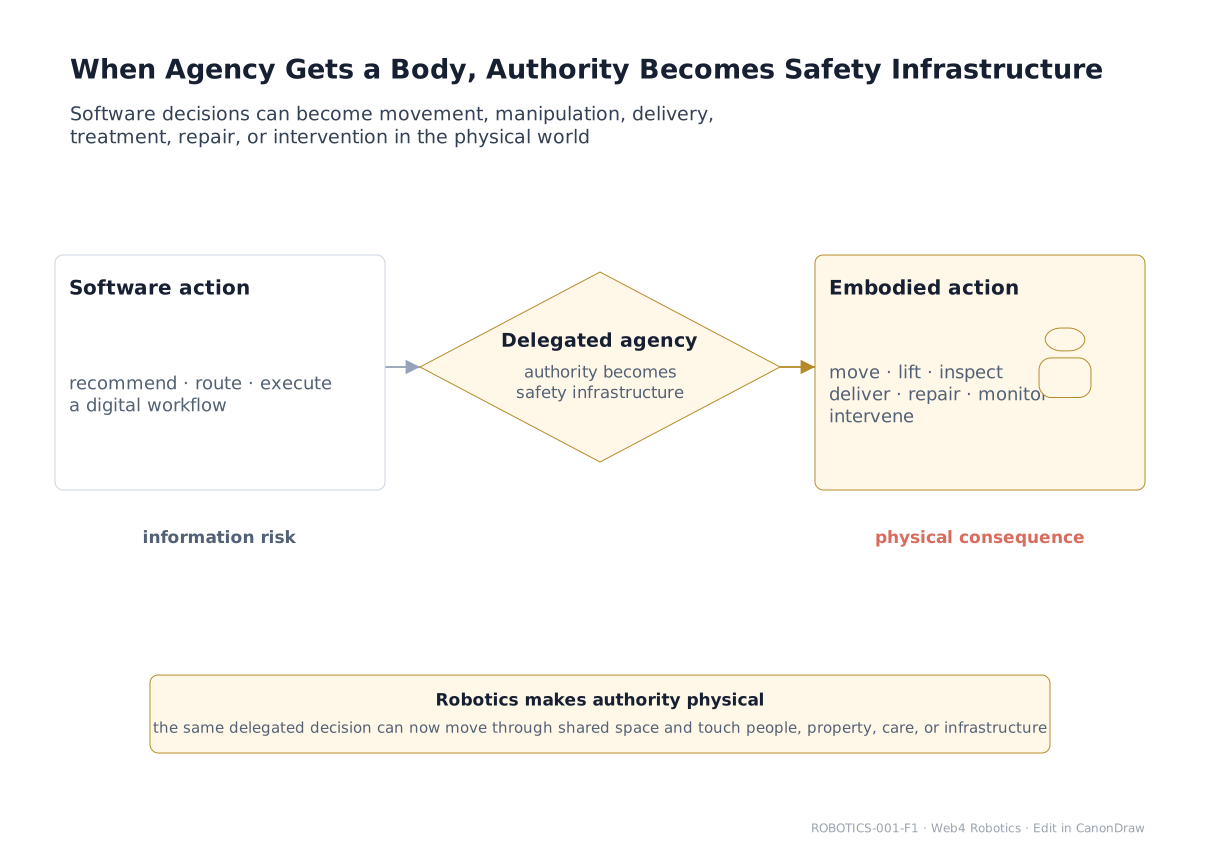
Now make the same problem larger: replace the children and ordinary objects with people, organizations, AI agents, robots, records, and resources moving at machine speed. Robotics turns delegated agency into physical action, making identity, authority, capability, safety context, provenance, trust, revocation, and stewardship operational safety infrastructure. Governed robotics enables useful autonomy while preserving human responsibility and limiting physical, financial, and infrastructure consequences.
Pause at the moment the small system could go wrong. That is the design question the paper keeps in view: not whether people or helpers are clever, but whether the surrounding structure preserves the intended meaning when action scales.
That is why the small story holds: a robot is a physical helper whose authority must have visible boundaries.
Explain it to a CEO
Why leaders should care
Governed robotics enables useful autonomy while preserving human responsibility and limiting physical, financial, and infrastructure consequences. Robotics turns delegated agency into physical action, making identity, authority, capability, safety context, provenance, trust, revocation, and stewardship operational safety infrastructure.
Explain it to an engineer
What the model means
Represent robot identity, owner and operator, capabilities, mission, authority envelope, environment, time, route, object class, safety policy, wallet, registry state, telemetry, evidence, stop, revocation, and stewardship. The paper is an applied composition of canon systems.
Talk hook
When software can move a machine through shared space, governance becomes physical.
Ask the room
Can you show who authorized a robot's last action, under what limits, and who could stop it?
Go deeper
The Canon is the source of truth.
ROBOTICS-001 formalizes this structure: Robotics turns delegated agency into physical action, making identity, authority, capability, safety context, provenance, trust, revocation, and stewardship operational safety infrastructure. The ordinary-life story is an intuition aid, not a replacement definition; the canonical paper remains authoritative for scope, terminology, limitations, and argument.
Read ROBOTICS-001 — the authoritative paper →