INC-012 · INC
Incentive Architecture: Engineering Organizations for Continuous Alignment
Continuous alignment comes from an architecture, not one bonus or metric.
01
Big idea
Continuous alignment comes from an architecture, not one bonus or metric.
Picture
See the structure
The simple version
Explain it like I’m ten
Healthy plants need more than one reward for growing. The greenhouse joins sunlight, water, soil, vents, careful gardeners, and gauges. When the weather changes, the whole system adjusts together.
Tell it at dinner
A story worth remembering
Healthy plants need more than one reward for growing. The greenhouse joins sunlight, water, soil, vents, careful gardeners, and gauges. When the weather changes, the whole system adjusts together.
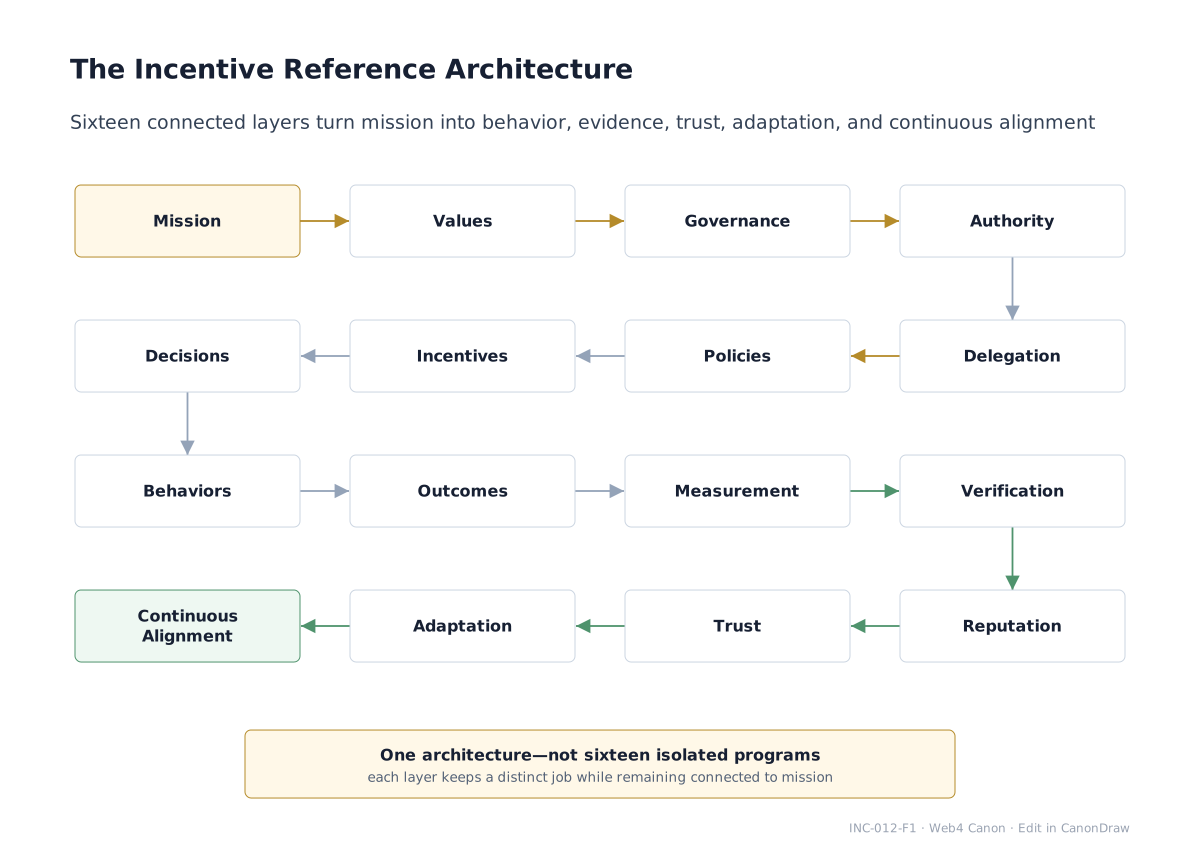
Now make the same problem larger: replace the children and ordinary objects with people, organizations, AI agents, robots, records, and resources moving at machine speed. Incentive Architecture integrates mission, values, governance, authority, delegation, incentives, behavior, measurement, verification, reputation, trust, and adaptation into a continuously improving system. The synthesis gives enterprises a blueprint for aligning human and machine behavior across policies, rewards, culture, evidence, and change.
Pause at the moment the small system could go wrong. That is the design question the paper keeps in view: not whether people or helpers are clever, but whether the surrounding structure preserves the intended meaning when action scales.
That is why the small story holds: continuous alignment comes from an architecture, not one bonus or metric.
Explain it to a CEO
Why leaders should care
The synthesis gives enterprises a blueprint for aligning human and machine behavior across policies, rewards, culture, evidence, and change. Incentive Architecture integrates mission, values, governance, authority, delegation, incentives, behavior, measurement, verification, reputation, trust, and adaptation into a continuously improving system.
Explain it to an engineer
What the model means
Compose the incentive-engineering disciplines into governed feedback loops with explicit semantics, instrumentation, audits, change control, and interfaces to authority, contribution, and compensation architectures.
Talk hook
You cannot align an organization with one lever when behavior emerges from the whole system.
Ask the room
Which disconnected incentive mechanism should become part of one continuous alignment architecture?
Go deeper
The Canon is the source of truth.
INC-012 formalizes this structure: Incentive Architecture integrates mission, values, governance, authority, delegation, incentives, behavior, measurement, verification, reputation, trust, and adaptation into a continuously improving system. The ordinary-life story is an intuition aid, not a replacement definition; the canonical paper remains authoritative for scope, terminology, limitations, and argument.
Read INC-012 — the authoritative paper →