INC-002 · INC
The Incentive Principle: Why Intelligent Systems Follow Incentives
Intelligent actors optimize for the incentives they perceive.
01
Big idea
Intelligent actors optimize for the incentives they perceive.
Picture
See the structure
The simple version
Explain it like I’m ten
A child wants a puppy to sit by the red mat, but always gives the treat near the door. The puppy keeps going to the door. It follows the reward it notices, not the wish the child never made clear.
Tell it at dinner
A story worth remembering
A child wants a puppy to sit by the red mat, but always gives the treat near the door. The puppy keeps going to the door. It follows the reward it notices, not the wish the child never made clear.
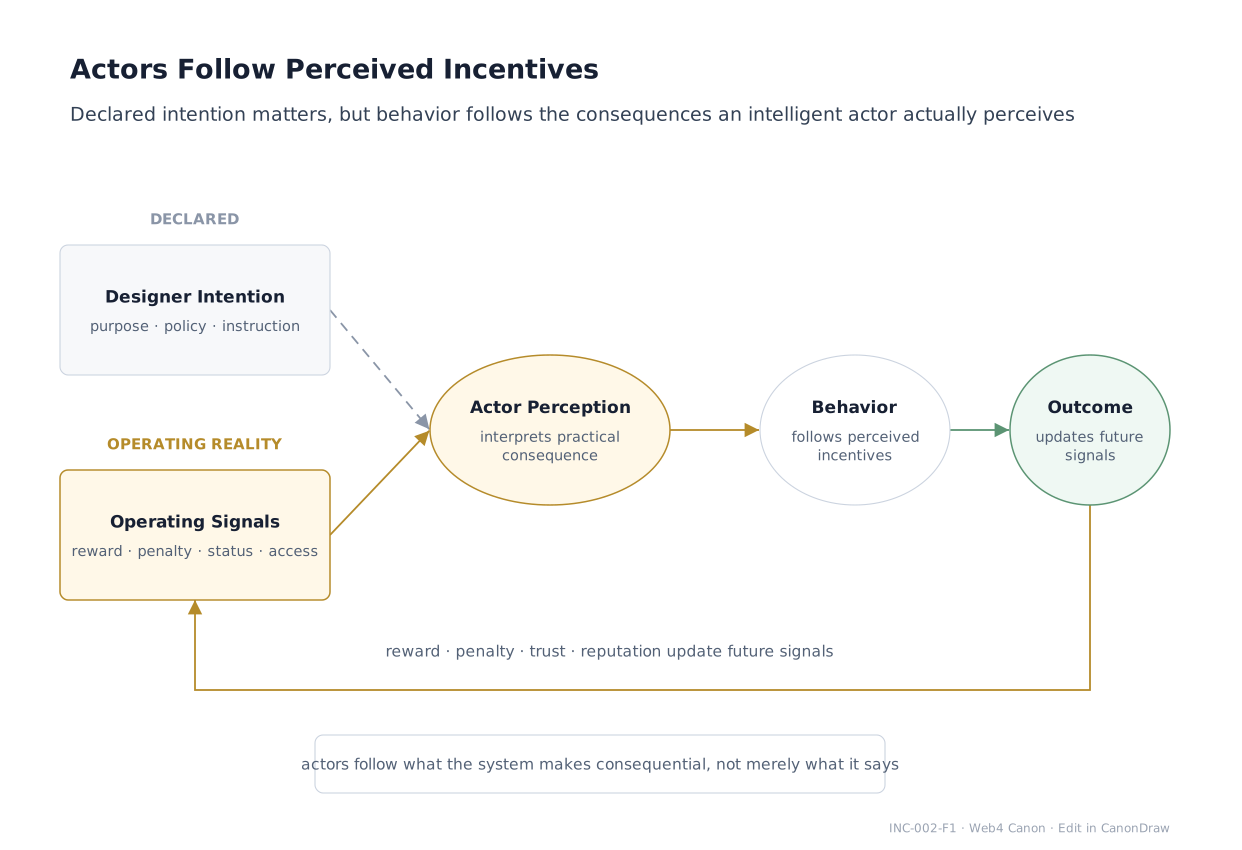
Now make the same problem larger: replace the children and ordinary objects with people, organizations, AI agents, robots, records, and resources moving at machine speed. The Incentive Principle holds that intelligent actors respond to perceived incentive structures, which may differ from a designer's stated intentions. Strategy succeeds only when the incentives visible to employees, partners, and agents actually point toward the declared mission.
Pause at the moment the small system could go wrong. That is the design question the paper keeps in view: not whether people or helpers are clever, but whether the surrounding structure preserves the intended meaning when action scales.
That is why the small story holds: intelligent actors optimize for the incentives they perceive.
Explain it to a CEO
Why leaders should care
Strategy succeeds only when the incentives visible to employees, partners, and agents actually point toward the declared mission. The Incentive Principle holds that intelligent actors respond to perceived incentive structures, which may differ from a designer's stated intentions.
Explain it to an engineer
What the model means
Distinguish intended, encoded, communicated, perceived, and realized incentives. Observe behavior and outcomes to infer the operative incentive landscape rather than assuming the specification was understood.
Talk hook
Your system is already teaching every actor what really matters.
Ask the room
If we ignored the policy words and watched only rewards and penalties, what goal would we infer?
Go deeper
The Canon is the source of truth.
INC-002 formalizes this structure: The Incentive Principle holds that intelligent actors respond to perceived incentive structures, which may differ from a designer's stated intentions. The ordinary-life story is an intuition aid, not a replacement definition; the canonical paper remains authoritative for scope, terminology, limitations, and argument.
Read INC-002 — the authoritative paper →